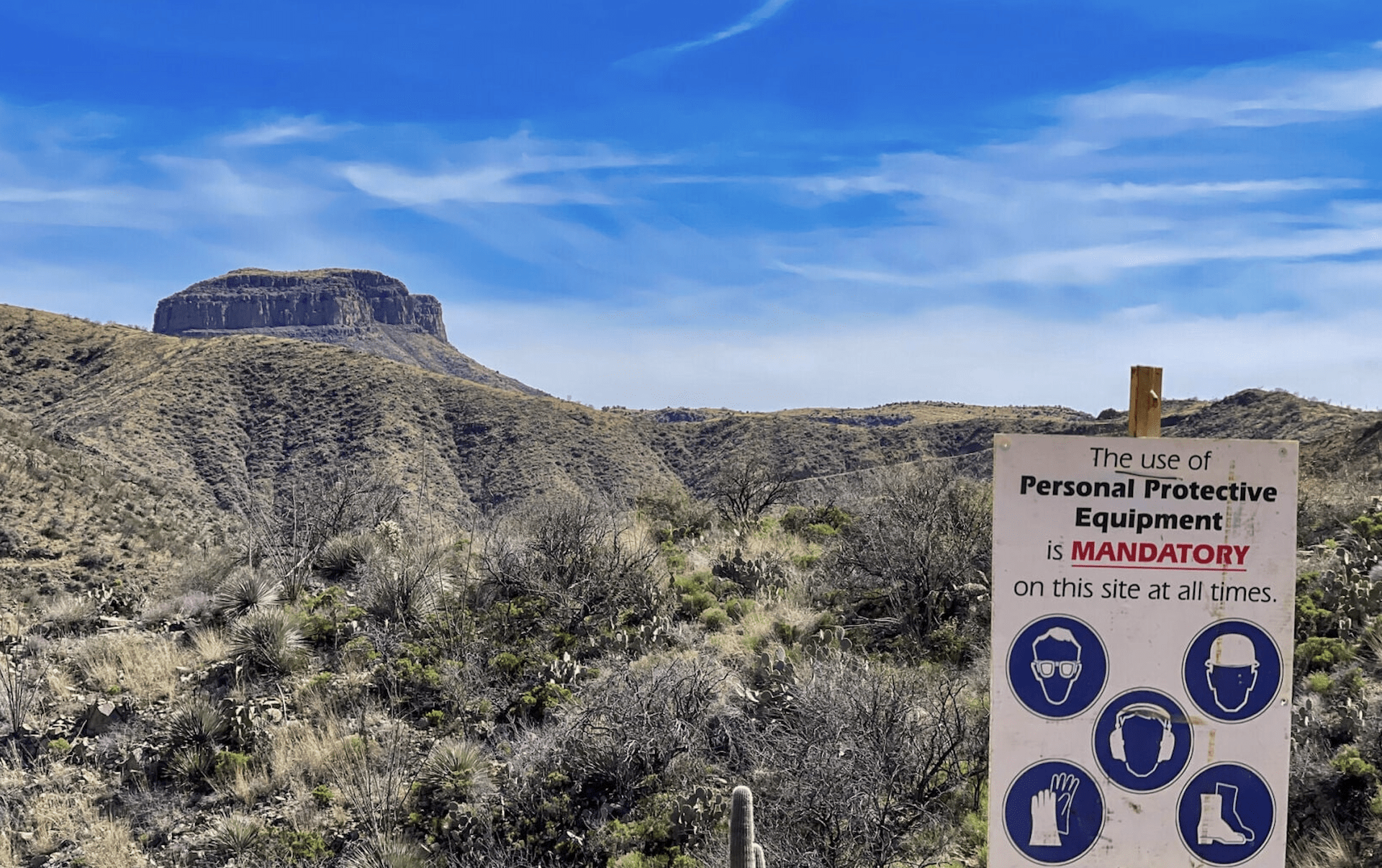
Arizona tax code is engineered to ensure mining companies keep as much of their extracted wealth as possible.
Here are four “fun facts” about how the tax math works in favor of the copper mining industry in the Grand Canyon State!
Fun Fact #1: The Ultimate “50% Off” Coupon
On paper, Arizona law sets the severance tax rate for metallic minerals (like copper, gold, and silver) at 2.5%. That sounds straightforward enough—but there is a catch in how the state defines what actually gets taxed.
Instead of taxing 100% of the mineral’s value, Arizona applies that 2.5% rate to the “net severance base.” By legal definition, this base is exactly 50% of the net value of production. Mathematically, this means the state immediately cuts the taxable amount in half, bringing the effective extraction tax rate down to a mere 1.25%.
Fun Fact #2: They Get to Deduct the Heavy Lifting First
If you pay a standard sales tax, you pay it on the gross price of the item. The Arizona Mining Severance Tax is much more forgiving. Before that 50% discount is even applied, mining companies are legally allowed to subtract the costs of mining, milling, and processing the ore from the gross value of the minerals.
• The Example: Let’s say a company pulls $100 million worth of copper out of an Arizona pit. If it cost them $60 million in labor, equipment, and processing to get it, they do not pay severance tax on the $100 million. They start with the $40 million net margin. Then, the 50% rule kicks in, reducing the taxable amount to $20 million. Finally, the 2.5% rate is applied to that $20 million. Instead of paying $2.5 million (which would be 2.5% of the gross value), the company pays just $500,000.
Fun Fact #3: The “1872” Federal Bonus (Zero Royalties!)
While this is a federal law rather than an Arizona state tax, it heavily compounds the low tax burden for mines operating in the state. Much of the copper mined in Arizona is extracted from federal public lands. Under the General Mining Act of 1872—a frontier-era law signed by President Ulysses S. Grant that remains active today—mining companies pay $0 in federal royalties for hardrock minerals extracted from public lands.
• The Example: If an oil or coal company extracts resources on federal land, they pay a standard royalty (usually between 12.5% and 18.75%) on their gross revenue. If a copper giant mines millions of tons of ore on public land in Arizona, they pay 0% in federal royalties, leaving only Arizona’s highly discounted severance tax as their main fee for extracting the resource.
Fun Fact #4: The Million-Dollar Machinery Exemption
You might assume that when a copper company buys tens of millions of dollars worth of equipment, they have to pay standard state sales tax (Transaction Privilege Tax) on those purchases, just like a regular business buying office computers or delivery vans.
Instead, Arizona law specifically carves out a total tax exemption for the copper industry’s biggest expenses. Under the state tax code, any machinery or equipment used directly in “extracting ores or minerals” or in “metallurgical operations” (like smelting, leaching, and refining) is 100% exempt from the state’s Transaction Privilege Tax and Use Tax.
• The Example: If an Arizona construction company buys a $5 million heavy-duty truck, they owe the standard 5.6% state sales tax—which comes out to a $280,000 tax bill. But when a copper mine buys a $5 million heavy-haul truck to pull ore out of an open pit, they pay $0 in state sales tax on that machinery. Because replacing giant tires, drill bits, and loaders is a constant necessity in copper mining, this specific exemption saves the industry millions of dollars every single year.
The Bottom Line
When it comes to mining, the Arizona tax code is mathematically designed to be as friendly, forgiving, and heavily discounted as possible.
Comments are closed